
Website:
www.thinkbio.ai
Welcome to the newest edition of our Newsletter HealthAI Horizons. This edition delves into how AI is helping decode one of biology’s most complex frontiers – immune tolerance. Inspired by this year’s Nobel Prize in Physiology or Medicine, we explore how intelligent models are advancing the understanding of autoimmune disorders and personalizing patient care. We also describe how ThinkBio.Ai®’s platforms are redefining immune intelligence, accelerating discovery in autoimmune research to building precision-driven insights that bring science closer to the clinic.
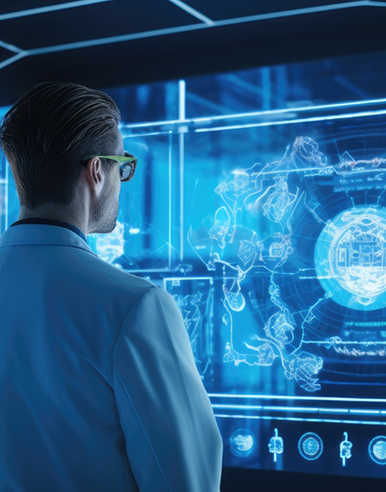

Every time I reflect on the immune system, I’m reminded of how extraordinary it is! A living intelligence within us, yet, when this intelligence falters, the consequences are profound. Autoimmune diseases remind us just how fine that balance can be. At ThinkBio.Ai®, we’ve always believed that decoding biology requires more than data, it requires understanding. That belief has guided the creation of our TheraBluePrint® -Immunology Platform, a system built to read the language of the immune system with clarity that wasn’t possible before.
What excites me most is how AI is reshaping what we can see. Where traditional methods saw uniformity, our models reveal diversities like distinct patient subgroups, unique molecular pathways, and new therapeutic possibilities that bring medicine closer to the individual.
This edition of HealthAI Horizons captures that journey. It reflects our growing ability to merge computation with compassion thus transforming complexity into insight, and insight into action. Because for us, progress in immunology isn’t just about smarter algorithms, it’s about giving science the intelligence to heal with precision.
Proteins are the molecular engines of life building, regulating, and protecting every cell in the human body. Their function depends on an exquisitely precise three-dimensional fold, shaped by the sequence of amino acids. When this structure is disrupted by even a single mutation, biology can unravel, as seen in sickle cell disease or cystic fibrosis, where misfolded proteins drive systemic dysfunction. For decades, understanding these structures has been the foundation of drug discovery. X-ray Crystallography offered the first atomic view of proteins, enabling rational drug design and breakthroughs such as HIV protease inhibitors. Later, Cryo-Electron Microscopy (Cryo-EM) revolutionized the field by resolving complex molecular assemblies including the SARS-CoV-2 spike protein, which proved pivotal during the COVID-19 pandemic. Today, artificial intelligence is propelling structural biology into a new era. Deep learning systems like AlphaFold and AlphaFold 3 predict protein structures and their molecular interactions with extraordinary accuracy, accelerating the discovery of new therapeutics and redefining precision medicine. At ThinkBio.Ai®, we are advancing this frontier by combining AI-based structure prediction with Molecular Dynamics simulations to capture how proteins move and interact within living systems. This is helping reveal disease mechanisms and inform the next generation of targeted therapies. To learn more about this, read our article “When AI Meets Structural Biology: Unlocking Protein Secrets to Improve Human Health” here
This year’s Nobel Prize in Medicine celebrates a landmark in immune biology. Mary Brunkow, Fred Ramsdell, and Shimon Sakaguchi unveiled how regulatory T cells and FOXP3 safeguard the body from immune self-attack. Their discovery reshaped immunology and continues to open new therapeutic frontiers across autoimmune and inflammatory diseases. It marks yet another example of how fundamental discovery science continues to illuminate the pathways that define human health.

Mary Brunkow

Fred Ramsdell

Shimon Sakaguchi
TheraBluePrint® – Immunology by ThinkBio.Ai® is an advanced translational platform accelerating targeted therapy development for complex autoimmune diseases. It integrates multimodal datasets spanning clinical trial evidence, multi-omics profiles, and curated literature, to enable precise patient stratification, disease mechanism mapping, and biomarker discovery. By identifying patient-specific molecular signatures and stratifying heterogeneous disease subgroups, the platform prioritizes targetable pathways for next-generation precision immunology. This unified framework enhances hypothesis generation, accelerates drug discovery, and informs personalized immune-modulating interventions, ultimately driving more effective and tailored treatments for autoimmune conditions.

DOCK8 immunodeficiency is a rare but severe disorder that compromises the immune system’s ability to recognize and respond to infections. Caused by large deletions in the DOCK8 gene, the disease disrupts the ability of T cells to form proper immune synapses – critical communication points that initiate immune responses. Without proper synapse formation, patients struggle to clear infections, often acquire allergies, recurrent skin infections, and increased risk of cancer.
Read More
Autoimmune diseases like lupus challenge conventional models of diagnosis and therapy. Their cellular and molecular diversity continues to obscure predictability and treatment outcomes. In our latest article, we explore how AI-enabled disease stratification is reframing our understanding of Systemic Lupus Erythematosus (SLE), revealing distinct immunologic pathways and patient-specific disease mechanisms that were previously hidden within heterogeneous patient populations.
Read More
Autoimmune diseases develop when the immune system mistakenly attacks our own healthy tissues. Targeting and reversing that without perturbing normal immunity is the major challenge. The diseases are multifaceted, having genetic and epigenetic components which can be altered by environmental exposure (viral infection, smoking, UV exposure, and altered microbiome etc.) and hormonal dysregulations.
TheraBluePrint® Immunology is bringing unprecedented clarity to this complexity. The platform has started a deep insightful analysis on Lupus which is often presented by challenges like fluctuating symptoms (flare-remission cycles) and lack of universally accepted biomarkers. Because of this variability (or disease heterogeneity) it is hard to find therapies that work universally. Traditional approaches often oversimplify this complexity, leading to treatments that might perform well in controlled clinical settings but fall short in real-world applications. TheraBluePrint® is designed to bridge this gap; translating high-resolution biological insights into actionable strategies that support more personalized, effective, and scalable autoimmune therapeutics.
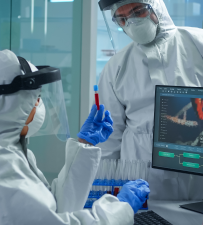
Through our TheraBluePrint® Immunology platform, we use proprietary AI foundation models combined with deep clinical and biological expertise. This helps us decode large-scale patient data and uncover patterns invisible to conventional analysis.

In a recent project studying Systemic Lupus Erythematosus (SLE), our platform analyzed transcriptome data from thousands of Lupus patients. The foundation model-based approach could cluster the patients into distinct subgroups based on molecular and cellular signatures that could guide more precise, effective treatments.

TheraBluePrint® doesn’t stop at data analysis. It integrates AI and ML pipelines that identify targetable disease pathways and ultrarare genetic variants, often missed by conventional methods, that play a key role in inflammation and immune dysfunction. This integrated approach accelerates and streamlines the process of tailored target identification and drug discovery.
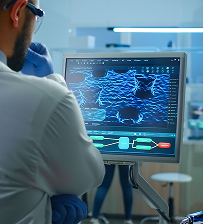
TheraBluePrint® Immunology leverages AI/ML-driven pipelines to identify novel intervention points in disease progression. In addition to clustering Lupus patients by key targetable pathways, the platform uncovers ultrarare pathogenic variants often missed by conventional analysis. By focusing on key endosomal inflammatory pathways, such as aberrant TLR7-9 signalling, we could reveal novel, high-potential targets for therapeutic intervention.
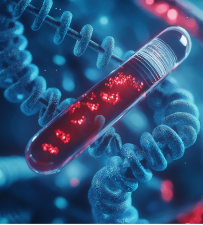
We aim to bridge the gap between unveiling molecular insights and drug discovery through our cutting-edge platform, delivering an end-to-end solution that transforms genetic discoveries into actionable therapeutic strategies. To this end, we’re using advanced structural modelling to visualize effects of specific mutations impacting protein function associated with disease pathology. These insights provide a rational, mechanism-driven blueprint for designing novel therapeutic inhibitors.
This integrated approach of combining deep patient stratification, novel target identification, and rational drug design, defines the strength of TheraBluePrint® Immunology.
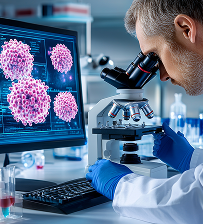
We’re expanding collaborations with leading academic, pharma and biotech partners to accelerate the journey from molecular discovery to clinical applications. The goal is simple but ambitious: bring clarity, precision, and speed to the fight against complex Immune-Mediated Inflammatory Diseases (IMIDs).
 August 08, 2025 ThinkBio.Ai® signs a Memorandum of Understanding with The Michnick Lab, Université de Montréal to jointly work on personalized medicine across therapy areas Read more
 July 15, 2025 ThinkBio.Ai® Acquires InfoHealth Solutions to Strengthen Healthcare Asset Management in the UK Read more
We’re proud to share that Apurva Kalia, PhD, EVP – Platforms & Solutions at ThinkBio.Ai, presented at the Mayo Clinic AI in Cardiology 2025 event held in Napa Valley, California. His session focused on how AI-driven patient digital twins and integrated clinical insights are advancing the future of cardiology and transforming clinical decision-making. The program brought together leading clinicians, researchers, and technologists to explore innovations in generative AI, predictive modeling, clinical decision support, and digital health transformation.
ThinkBio.Ai® is a next-generation Digital Biology and AI company dedicated to transforming the BioPharma and Clinical Healthcare industries by delivering impactful solutions that drive efficiencies in both drug research and clinical practice. By leveraging deep domain expertise in specialized areas such as oncology, immunology, cardiology, and neurology, and utilizing proprietary platforms that incorporate knowledge graphs, digital twins, foundation models, and AI/ML pipelines, we develop and license advanced solutions that accelerate drug discovery and optimize clinical pathways. Our secure, federated architecture ThinkBio.Ai® and third parties, unlocking powerful, AI-driven insights in an explainable environment to drive therapeutic and research breakthroughs.