Can AI Predict Which Drug Candidates Will Actually Work?
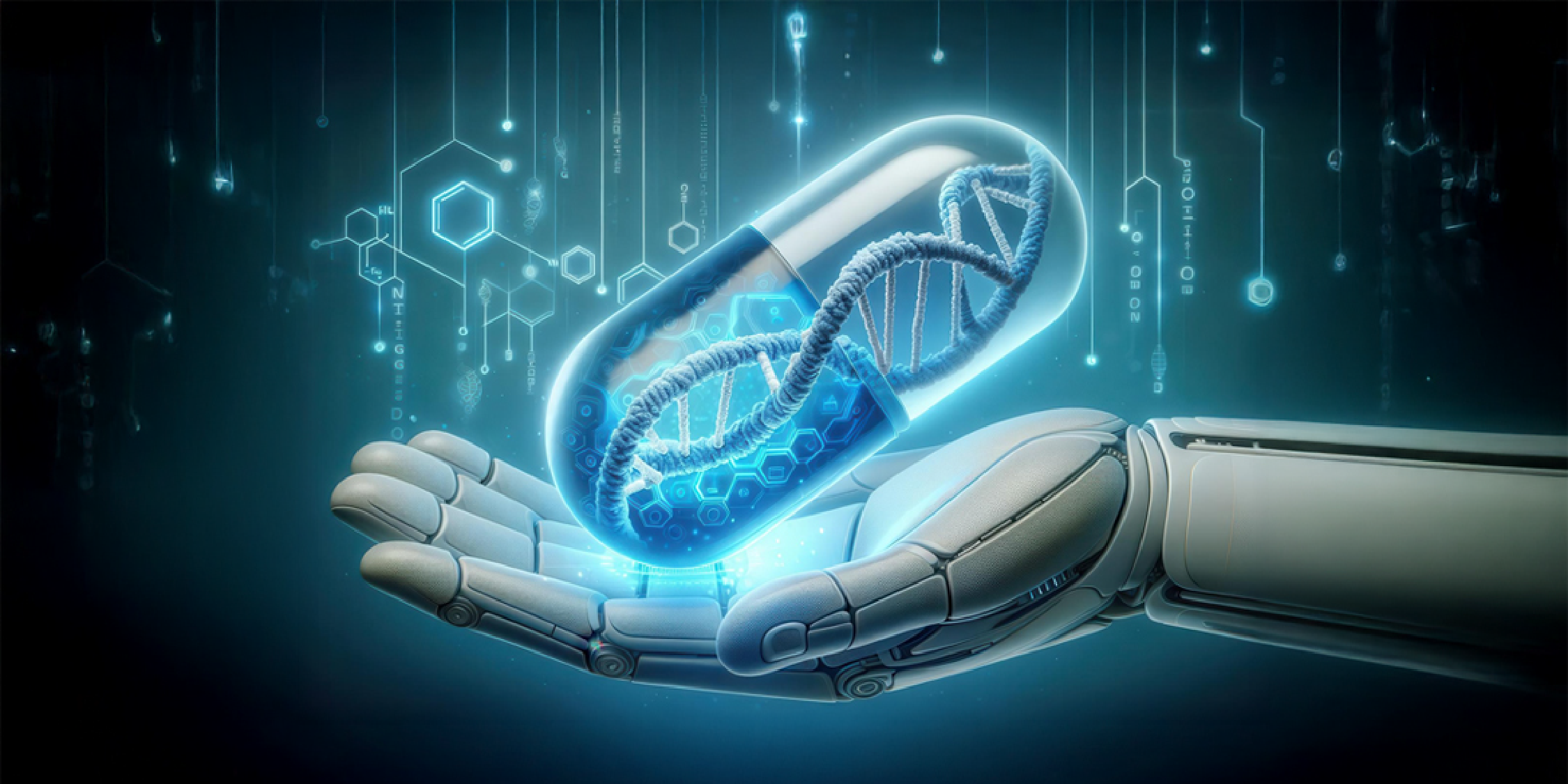
Despite tremendous advances in biology and data science, bringing new therapies to patients remains one of the toughest challenges in medicine. Fewer than 1 in 10 drugs that enter clinical trials ever make it to market.
Behind these numbers are years of effort from scientists designing molecules to hit a specific gene target, companies investing millions in preclinical research, and patients waiting for new hope. Yet, promising drug candidates often fail because their biological targets don’t behave as expected, or because adverse effects emerge that outweigh the benefits.
For researchers and clinicians, the core question is: Can we predict early on whether a therapy is likely to work and for whom?
Why Predicting Drug Success Is So Difficult
Drug response is the product of an intricate biological system. A therapy that looks effective in a cell line or animal model may behave very differently in a human body, influenced by genetic diversity, disease stage, and interactions with other molecular pathways. In fact, there is diversity even within the behavior among the human subjects.
Even when the drug-target interaction is well understood, several unknowns remain:
- Is this target truly central to disease biology?
- Could hitting it cause unintended effects elsewhere?
- What is the ADMET (Absorption, Distribution, Metabolism, Excretion and Toxicity) profile for this drug?
- At what stage of the disease will it deliver the most benefit?
Traditional risk models and preclinical testing can’t always answer these questions with precision. Furthermore, factors such as data bias, limitations of preclinical models, and incomplete understanding of complex molecular networks often hinder accurate prediction. Drug development is, in many ways, like navigating a maze without a map — every turn could lead to a promising therapy or a costly failure.
An AI-Driven Approach to Predict Drug Success
This is where ThinkBio.AI’s DrugSuccess.AI™ comes in. The platform integrates multi-omics, genetic, and preclinical data with curated public datasets and peer-reviewed literature to map the network of drug–target–disease relationships and create knowledge graphs out of these networks.
By building knowledge graphs that capture how drugs interact with molecular pathways, biological systems, and disease processes, DrugSuccess.AI™ helps researchers predict
success or failure before a clinical trial even begins. The platform also incorporates functional and structural insights and target druggability assessments, helping to prioritize candidates likely to be effective in humans.
Using advanced statistical models and foundation AI systems, the platform generates a Drug Success Score, an evidence-based estimate of a therapy’s likelihood to progress from preclinical stages to clinical approval.
By integrating simulation-based trial modelling, adaptive design strategies, and synthetic control insights, DrugSuccess.AI™ supports smarter early-phase planning while minimizing resource waste.
Learning from Past Successes & Failures
Every approved therapy carries a story of discovery; every failed one, a lesson! DrugSuccess.AI™ learns from both. It draws on extensive databases of prior drug development outcomes and clinical trial data, analyzing why some molecules succeeded while others did not from target biology to patient selection and safety profiles.
This approach doesn’t replace human expertise; it augments it. By surfacing hidden patterns across massive datasets, DrugSuccess.AI™ helps scientists focus their efforts on the most promising targets and mechanisms.
A New Lens for Biopharma and Beyond
For biopharma teams, the ability to prioritize high-value targets means saving years of effort and millions in development costs. For investors, it provides a clearer view of where innovation is most likely to pay off.
But at its core, the impact is human. The faster and more precisely we identify therapies that will succeed, the sooner patients can access safer, more effective treatments. By enabling smarter clinical trial simulations and predictive designs, DrugSuccess.AI™ helps reduce unnecessary exposure to ineffective therapies and streamlines the path to patient benefit.
Seeing the Bigger Picture
Just as a pathologist looks beyond individual cells to understand the full tissue environment, DrugSuccess.AI™ looks beyond isolated data points integrating molecular, clinical, and contextual layers into one cohesive view.
By connecting the dots across biology, data, and decision-making, ThinkBio.AI is helping the scientific community move one step closer to an age where drug success is not a matter of chance, but of intelligent prediction.